Dark Humor

A friend sent me a link to this essay by Todd Pitinsky. Pitinisky’s  premise is that those who hate Jews love the experience, thrill over it and love it even more when we try to fight, neutralize or even educate. I read The Joy of Hating Jews/Why antisemites always have a blast — and how Jews enhance the experience and nodded my head through much of it. What a waste of life. To spend it stoking hatred.  It all feels so helpless.  So inevitable.  Here we go again.  As I’ve written before it’s not my job to stop an anti-semite from hating me. It is my job to live as a Jew: attend synagogue, support Jewish institutions, vote for my understanding of the better candidate (slim pickings these days) and then hope for the best.

So what’s a Jew to do?  This Jew took a stab at some humor. Dark humor to be sure. Minorities living at the whim of greater populations have used humor for eons to withstand the onslaught. I tried my hand at it. For a moment or two or three it felt alright.


Q. How many pogroms does it take to destroy the Jewish people?
A. Don’t even bother. They’ve tried for millennia.

Q. What do you call a Jew-free country?
A.  A failure.

A Jew-hater walks into a bar and the bartender says,
“I’m sorry. We don’t serve Jew-haters here. No, wait.
I’m not sorry at all!”

Q. What’s the difference between a Jew and a cockroach?
A. Cockroaches hide. Jews have pride. Tons of it.
More than any other group. Except maybe the gays.
Gay Jews get extra points. And gay theater Jews? Man, they are golden.


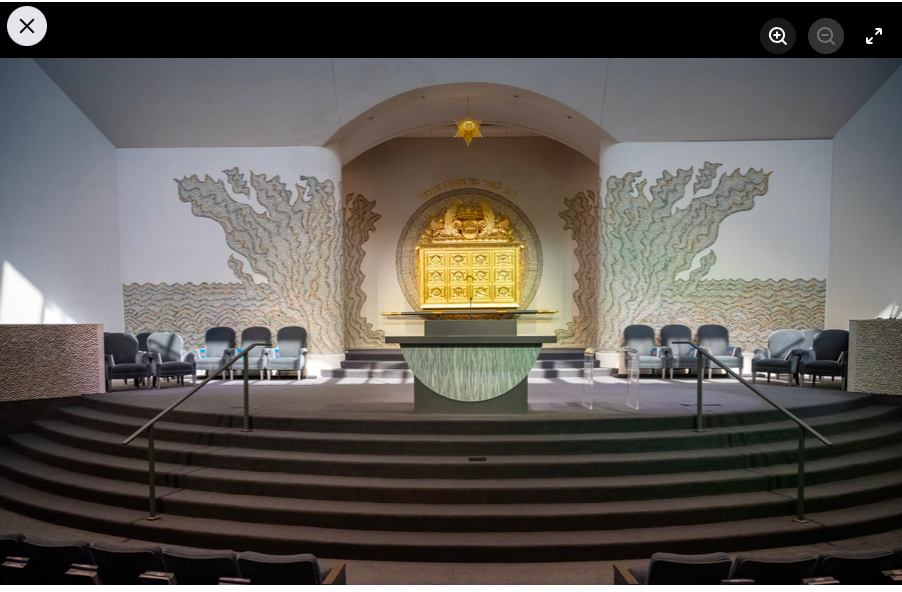
photo above courtesy of Temple Israel, West Bloomfield, MI
Six months after the March attack, the sanctuary was rebuilt
and ready to welcome congregants for Rosh Hashana services.  

Read or Leave Comments ()

In Memory of Clara. Once Again.

Today is Yom HaShoah, the day comemorating the Holocaust. I am reprising an essay from 2016 in memory of Clara Eisenstein who was, and remains,  a blessing in my life. 

What is the linguistic difference between the words Holocaust and Shoah?  The latter refers to  an occurrence of utter calamity,  the laying waste of and complete desolation of the Jews. Holocaust, on the other hand,  derives from the Greek referring to a burnt sacrifice offered to a god.  The Nazis’ intent was not a religious offering but the complete and utter destruction of all Jewish life. While the difference is indeed profound outside of Israel Holocaust is the more common usage outside of Israel.


photo courtesy of the Vermont Holocaust Museum.


Read or Leave Comments ()

New Attack/Same Old Hatred

We can use the law to punish. We can continue to monitor the dark web in hopes of pre-empting those who make it their life’s purpose to kill Jews. We can continue to divert funds to security mesaures instead of earmarking those hundreds of millions of dollars for education, scholarships, programming and more. Two thousand plus years of history have taught us that we cannot stop others from hating us. That hatred has always begun in the homes of others. In their hearts. In their countries and from their pulpits and schools. And as is now the new reality in our own universities and public school systems, too, It’s cloaked as “anti-oppression” and “anti-Zionism” but it’s still the same old same old same old damn hatred of a people who piss off the haters by just being alive. By thriving. By inventing. By creating. By innovating.  By persisting to celebrate life even, how dare we!, barely 24-hours after our synagogues are attacked. We show up to celebrate life, to praise the G’d of Life, to offer prayers of thanksgiving and prayers for peace for all people everywhere.

Now for some news from the other side of the coin. The miracle side. Ayman Mohamad Ghazali took no one’s life at Temple Israel but his own.   The synagogue’s security team had been trained for the possibility of an attack. Their bravery and quick action saved everyone’s, get that everyone’s lives who were there on an ordinary Thursday.

And here’s where the goodness that is America stepped up. Yes, the goodness of a nation built upon a covenantal text that calls upon its citizens to reach out and be neighborly, to protect one another’s rights, to stand together. We may not always answer the call, yet last Thursday it was answered time and again. A Neighbors opened their homes to the nursery schoolers and their teachers. Shenandoah Country Club, across the street from Temple Israel, welcomed the school buses arriving with nursery schoolers and their teachers.  Their kitchen staff was ready with chicken nuggets and French fries. Shenandoah’s members are Chaldean Christians of Iraqi descent who fled the country’s religious persecution. Their members and Temple Israel’s have enjoyed a supportive and respectful relationship for decades. Shenandoah’s leadership reached out to Temple Israel’s rabbis offering space to hold Friday evening Shabbat Serivces the following day.

It didn’t take the media long to justify the terrorist’s actions: he was grieving the deaths of two of his brothers, a niece and a nephew in an Israeli Air Force strike on a known Hezbollah military structure. According to the Israel Defense Force one of the brothers, Ibrahim Muhammad Ghazali, was a Hezbollah commander responsible for managing weapons operations within a specialized branch of the Badr Unit. The unit is responsible for launching hundreds of rockets toward Israeli civilians throughout the war.

Here’s my question and it should be yours as well every time you hear the media’s rationalizations. Why is grief an excuse for the attempted murder of 110 nursery schoolers, their teachers, and other staffmembers?

There is no justification. A Jew is a human being. Temple Israel is a synagogue. Israel is a country. They are not synonymous.


Read or Leave Comments ()

What’s a Jew to Do?

Or say? Or think?

I thought to share links to essays. Or tell you about Ask Haviv Anything, a podcast I am loving right now. I thought about maybe not writing anything and letting it all go this time around.

Instead, I am going to go stream of consciousness, allowing my fingers to take dictation from my heart.

We will get through this. We Jews are a forever people.

That seems to piss alot of people off.  Let it.

We are stronger than hatred. We are stronger than the eviltry lobbed our way century after century. We know the stories of courageous grandparents and greatgrandparents who faced down Cossacks and Nazis and present-day shooters, These stories are deposits in our shared memory banks; we make withdrawals when we need to, fortifying ourselves in their memory.

We will light our candles. We will sing our songs. We will eat our latkes with sour cream and applesauce. And we will remember those whose lives were taken on this holiday and others all the way back to the Maccabees and before then, too.

We will remember the miracles: of a day’s worth of oil lasting for eight; manna from Heaven, the sun’s rising each morning. and the moon endlessly cycling through her seasons.

And just three nights ago a miracle amidst the murder at Bondi when a righteous man, Ahmed al Ahmed, disarmed one of the gunmen. May he recover from his injuries and be blessed with long life, a life not extended to Boris and Sofia Gurman and Reuven Morrison killed as they attempted to stop the nightmare.  And 12 others.

Just now the sun has set. Martin and I will soon head to synagogue where menorahs will be lit and latkes enjoyed. Where there may well  be an additional armed guard or two. Where we will dance a familiar dance stamping our feet in joy and sorrow and rage and determination to live and love and laugh.

Because our byword is l’chaim and our Jewish nation’s anthem is called Tikvah. And when you have life and hope you are eternal. You are the light.

Read or Leave Comments ()

To Life. To Hope.

I am cleaning up after last night’s Yom Kippur break-the-fast.  It might possibly have been our 36th such gathering. Our numbers are down from some years’ pinnacle of 30+. We are fewer now; there are those at the table now in heart and memory. One Yom Kippur tradition is to light memorial candles for relatives who have died in years passed.

Whenever I see a spent memorial candle, I think of Dora and Hy Enoch, Martin’s cousins who made it to America and rebuilt their lives out of the ashes of the Holocaust. They were sweet and gentle. They always embraced me with love and beautiful smiles. I remember one of our visits to them after they had moved from their home in  Brooklyln to an apartment in Coney Island. Dora offered me some orange juice in a small glass.  One of many in her cabinet.  The small glass had begun its life holding memorial candle. Now it held juice. (The potential wordplay of juice/Jews doesn’t escape me.)

Something made me wash out and save this year’s glasses. I teetered. Is it macabre to use keep and re-use them?  Then it occurred to me, this is what Jews do.  It’s what Dora and Hy and thousands of Survivors like them did in the years after the war: recycled pain and mourning into affirmation. Jews choose life. Jews acknowledge death, keep alive the memories of loved ones in heart and in deed, and re-enter into life. What better use might there be for these little cups than to use them from time to time to celebrate Kiddush, the blessing over wine that concludes with an affirming Amen! and “To life!”  


Read or Leave Comments ()

Should War Beset Me, Still Would I Be Confident

Should War Beset Me, Still Would I Be Confident
The story of Judith Kaplan*

Looking out my roommate’s window, I could see the black smoke as the twin towers of the World Trade Center burned and then collapsed 60 blocks away. I’ve lived in New York all my life, and it took only a second or two to realize that people I knew who worked in the towers might already have died. This is my city. That was my skyline, my buildings. The lobby of our apartment house was complete pandemonium. Some of our building’s residents had run the three miles north, covered in ash, crying hysterically. We live quite close to the Empire State Building and we were terrified it would be next. Out on the street all we could do was watch. Can you imagine military vehicles lumbering down Lexington Avenue? It became so difficult to breathe that we had to cover our faces when we walked outside. A distinct smell permeated the air. It was completely different from the burning odor we’re all familiar with and lasted for months after the attacks.

My roommate and I were desperate to help in some way. We gathered food and socks and towels for the Red Cross, but it seemed like such a small thing. Hundreds had already shownup to give blood, but that wasn’t an option for me. There was little to do, and it hurt to be unable to aid the city or the hundreds, even thousands of people affected. I didn’t know it at the time, but an opportunity to help was about to present itself. When a Jew dies, the Chevra Kedisha, the Jewish burial society, washes and dresses the body, and then a person called a shomer (shomeret in the feminine) begins what is called shmira— watching over the body until it is buried. During this time of guarding the body, the shomer also recites Psalms.

Shmira is not only a gesture of protection, it is also one of respect. The human body once held a soul, and you want to treat it with the utmost dignity. Within hours of the attack, Armand Osgood from Congregation Ohab Zedek in Manhattan began organizing scores of volunteers to perform shmira. They began on September 12 with the arrival of the first remains, which, until they could be identified, could not be buried.We believe that the soul doesn’t leave the physical world until the deceased is buried. Until that time, the soul is in limbo and in pain, no longer animating a human body, but not yet free to return to God. The recitation of Tehillim, or Psalms, not only eases the soul’s pain but helps the deceased return to God.

About a month after the attack a close friend, Jessica Russack, called and said they were having trouble getting people to do shmira over the Sabbath. Because observant Jews do not travel on the Sabbath and none of those reciting Psalms lived within walking distance of the temporary morgue that had been set up adjacent to the Chief Medical Examiner’s Office, no one was reciting Psalms on the holiest day of the week. Within a few hours we got eight girls, classmates of ours from Stern College, the women’s school of Yeshiva University, to commit to this mitzvah. I took the midnight–4 a.m. shift.

The length of Thirtieth Street, from First Avenue down to the FDR Drive, had been converted into the aforementioned temporary morgue. The police and fire departments and the Red Cross were all a part of the rescue and recovery efforts and had stations. The Salvation Army undertook the ongoing responsibility of feeding the volunteers, and the Red Cross also continued to provide chaplains. I was very nervous the first night. How much would I see? Who would be there with me? Would I burst into tears? I was already so emotionally spent, so nervous and on edge.

But when I entered the tent where I would be praying, a sense of duty and spirituality came over me. None of my fears were realized. I opened up my Tehillim, my book of Psalms, and just started to sing. It felt so good. I wasn’t sad and I wasn’t scared. I was surrounded by a feeling of purpose. I’ve come to be known as “the singing girl.” There are 150 psalms, and I sing each one. Some have their own melodies and sometimes I use the tunes from Lamentations. Melodies come to me from unknown places, too. One evening I realized that I had incorporated the melody to a Rosh HaShanah prayer my grandfather had been teaching my father before September 11. For weeks before the High Holidays I had heard them practicing together.

At first people were skeptical of us. They had grown accustomed to the volunteers from the Upper West Side praying at the morgue site for a month. I am pretty small, and one Shabbat I heard someone say, “What’s this little girl doing here?” Their attitude didn’t bother me. I was there for a purpose; it was me and the prayers and the souls. I just smiled and waved, and as time went on I became a regular on Friday night. Some nights the on-duty police officers talked with me about their experiences at the World Trade Center. Occasionally people would ask for the singing girl so they could thank me. “You don’t know how much this means to know that someone is out here praying,” one said. We don’t just say prayers for the Jewish souls, but for everyone. This calamity transcended all boundaries. A soul is a soul.

After five months of these Friday nights, I needed a “real” Shabbat at home, a full night’s sleep, and time with my family.  But I missed praying. I was back the next week, rested and eager to begin again. It’s sad, but it’s what we do. It’s a chesed shel emet, a kindness that cannot be repaid. It’s the biggest help, the biggest mitzvah you can do. It doesn’t ruin Shabbat for me but adds an extra spiritual layer. In a way I leave the world and all my worries behind. Singing Tehillim one after the other is magne- tizing. It’s wonderful. I can’t sit by and let pass this opportunity to help. Neither could my sister, who often does shmira during the week.

In 20 years, when it’s rebuilt, I can tell my children: “This is what happened and this is what I did. This is what the Jewish people did as a community.”During those first weeks and months, the air was heavy with souls of the dead. It sounds crazy, but I felt their presence. As I prayed I could feel them getting better. After talking with a policeman, I knew it wasn’t my imagination. He’s been around enough dead bodies to know the feel of a soul nearby. I feel them, too, and as the months have gone on and bodies have been buried, I also feel the air thinning. It feels lighter.

Reciting Tehillim at the morgue each Shabbat has transformed my attitude toward prayer. Tehillim are not unfamiliar to me. I’d been taught long ago to recite Psalms in times of crisis. Before September 11, I prayed, but the words weren’t my words. They stayed on the page. Now I am connecting with the Psalms as never before. I know what it is to pray with my heart, not just my head. I have taken these words that King David wrote 3,000 years ago and made them my own. Each week I see the effect these Psalms have on people. Prayer has power. I’ve seen it. I’ve felt it. It’s real.

By coincidence, the first assignment in our oral interpretation of literature class was to recite a Psalm that held particular meaning for us. The assignment was due September 12. Although I’d recited Psalms all my life, I had no idea which one I would pick. On the evening of September 11, my roommate and I were particularly struck by [verses from] Psalm 27:


The Lord is my light and my help,
whom should I fear?
The Lord is the stronghold of my life;
whom should I dread?
When evil men assail me
to devour my flesh,
it is they, my foes and my enemies,
who stumble and fall.
Should an army besiege me,
my heart would have no fear;
should war beset me,
still would I be confident.


That first week I was to do shmira, my mom asked me if that was really how I wanted to spend my Shabbat. I told her that it was the most meaningful way I could possibly spend it. Right after the attack, everything seemed incredibly bleak; I tried so hard to focus on the positive. In the subsequent weeks I’ve realized that good has come out of this tragedy. The unity of the people of New York is unbelievable. Their goodness cannot be matched. That goodness is our strength; that is what will beat the terrorists. That goodness teaches us to love and accept everyone regardless of their faith, skin color or nationality. This is the exact opposite of what terrorism is.

Psalm 27 closes with these words: “Wait upon the Lord, remain strong. Let your heart give you courage; wait upon the Lord.” September 11 was the most awful day of my life. Doing shmira each Shabbat allows me to remain strong, giving courage to my heart, urging me to wait upon God.

*excerpted from This Jewish Life: Stories of Discovery, Connection and Joy by Debra B. Darvick

photo courtesy of Wikimedia Commons


Read or Leave Comments ()