
In a Secret Place…Chan Sei Ghow
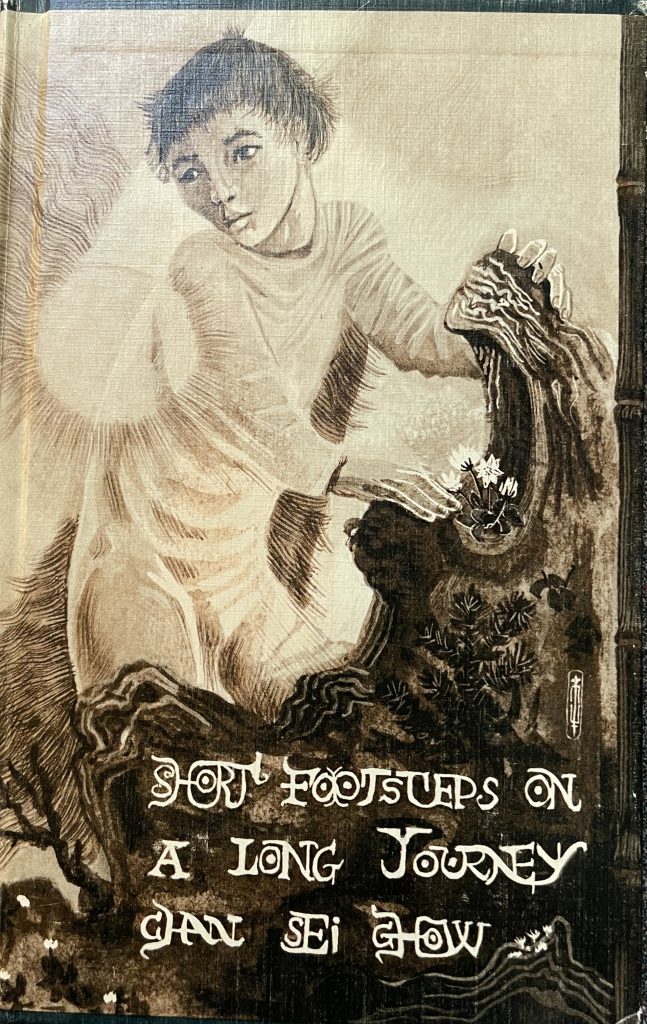
In a secret place
beneath the trees
I tremble on a bed of leaves
and marvel that I am me.
Now the winds of autumn
rub the naked twig
stirring deadened leaves
to make a welcome song for winter.
Chan Sei Ghow, Short Footsteps on a Long Journey
Little is known about the author of this book. Chan’s poems come down to us from a missionary who journeyed to China in 1894 and remained there most of her life. As her nephew writes in the foreword, “[Aunt Carrie] was rather more teacher than missionary and like most good teachers, she had her favorite students upon whom she lavished extra attention. Chan Sei Ghow was one of these arriving at the mission, an orphan from a small farming village.”
The boy was bright, learned quickly and easily developing a special love for poetry. He stayed until perhaps his late teens. There were rumors that Sei Ghow had fallen in love with a girl who had been sold into prostitution. Another rumor: she took her own life. And another: maybe the girl once came to the mission and spoke with Aunt Carrie. Whatever the truth, Chan Sei Ghow left the mission never to be seen again.
Three years or so after his departure, a farmer appeared at the mission with a package for Carrie. It contained all of Chan Sei Ghow’s poems. Throughout her life Carrie made literal translations of them. Her nephew, W. Robert Miller, took up the baton collecting the poems into this beautiful book.
I Googled Chan Sei Ghow, curious if there was anything more to learn about him. There are several listings for his book but nothing about the poet. Next Google translated his name; not so beautiful. It means: “Shoveling a dead dog. This is an intense Cantonese insult or curse, most common in casual or heated arguments. Also to scold, berate, or lecture someone mercilessly which they are already down or unable to defend themselves.”
Could this have been his given name? A word curse cast upon him between being orphaned and finding his way to the mission? Could it have been the name he gave to Winfield’s aunt when he arrived ? I read that Chan, at its most simple, means shovel. Ultimately perhaps the poet learned and shares one of life’s truths: there is a lot of mess to shovel away in order to reach and share the found grains of solace and joy.
Reading and rereading Chan Sei Ghow’s poetry I feel I have struck gold.
A place can be vacant
yet it is not empty
until someone you love
has passed through.


